Two years ago, AI and web development met through autocomplete that guessed the next line. In 2026 it drafts whole components, writes the first version of a migration and reviews a pull request before a person does. The work has not disappeared. It has moved.
After shipping more than 150 WordPress and Next.js sites, here is what has actually changed in how I build for the web, and what has stayed exactly the same.
1. The draft is cheap. Judgement is not.
Generating a first version of almost anything is now fast: a pricing table, a REST endpoint, a test suite. That speed is real, but it moves the bottleneck. The expensive part of a project is deciding what to build, spotting the edge case the draft missed and saying no to the clever thing that will hurt in six months.
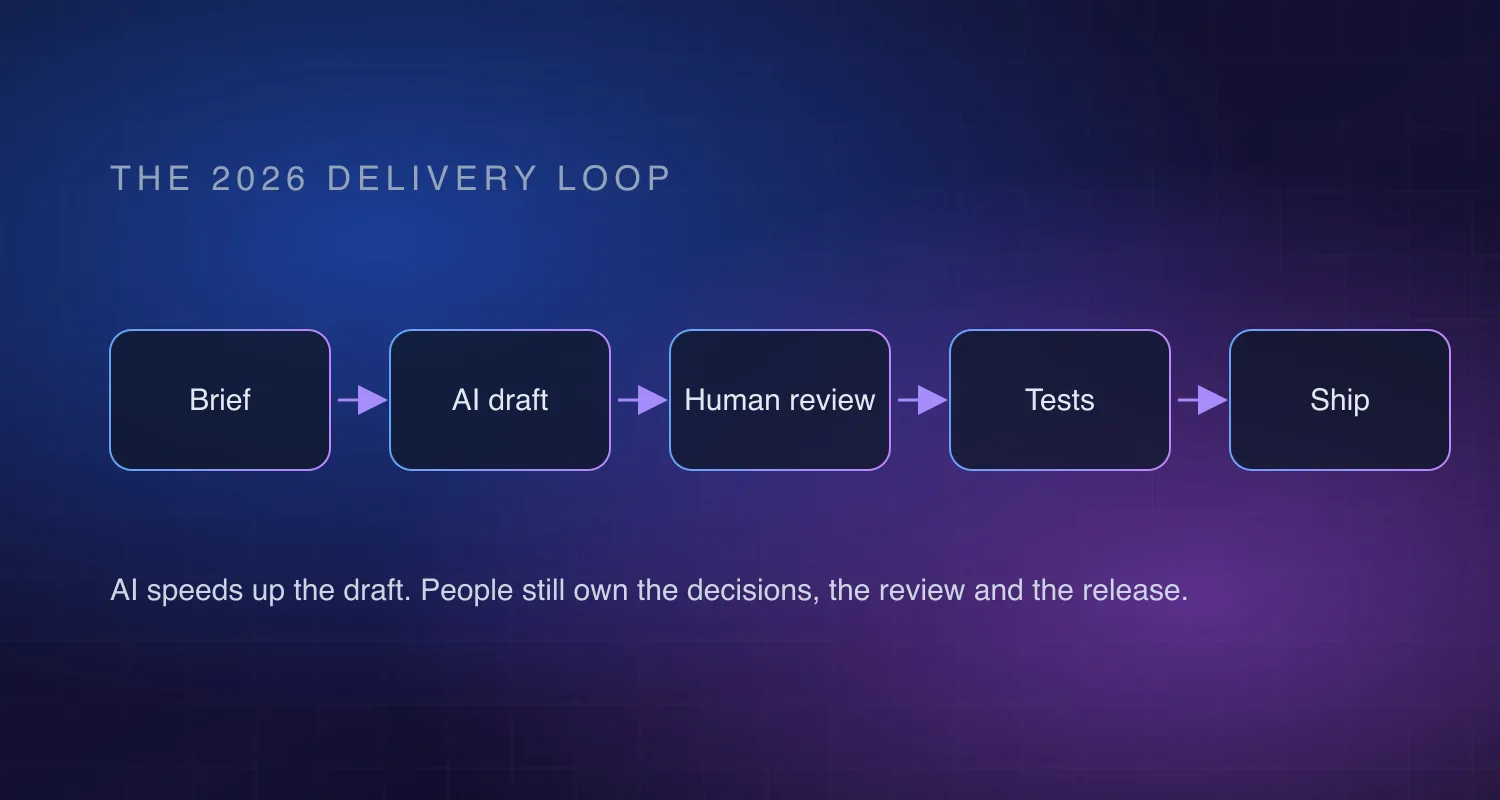
In practice that means every AI-written change still goes through the same gates as human code: a typed schema at every boundary, a review against the brief, and tests that fail when the behaviour is wrong rather than when the wording changes.
2. Typed boundaries matter more than ever
Models are confident and occasionally wrong. The cheapest protection is to validate everything that crosses a boundary: form input, API responses, database rows, environment variables. If the shape is wrong, fail loudly and early.
const lead = leadInput.safeParse(await req.json());
if (!lead.success) {
  return Response.json({ error: "Check the highlighted fields." }, { status: 422 });
}
This small pattern caught more AI-introduced bugs on my projects this year than any other single habit.
3. Performance is still a feature you can see
Visitors do not care how a page was written. They care that it appears instantly and responds when they tap it. Core Web Vitals are still the clearest way to hold a site to that standard.
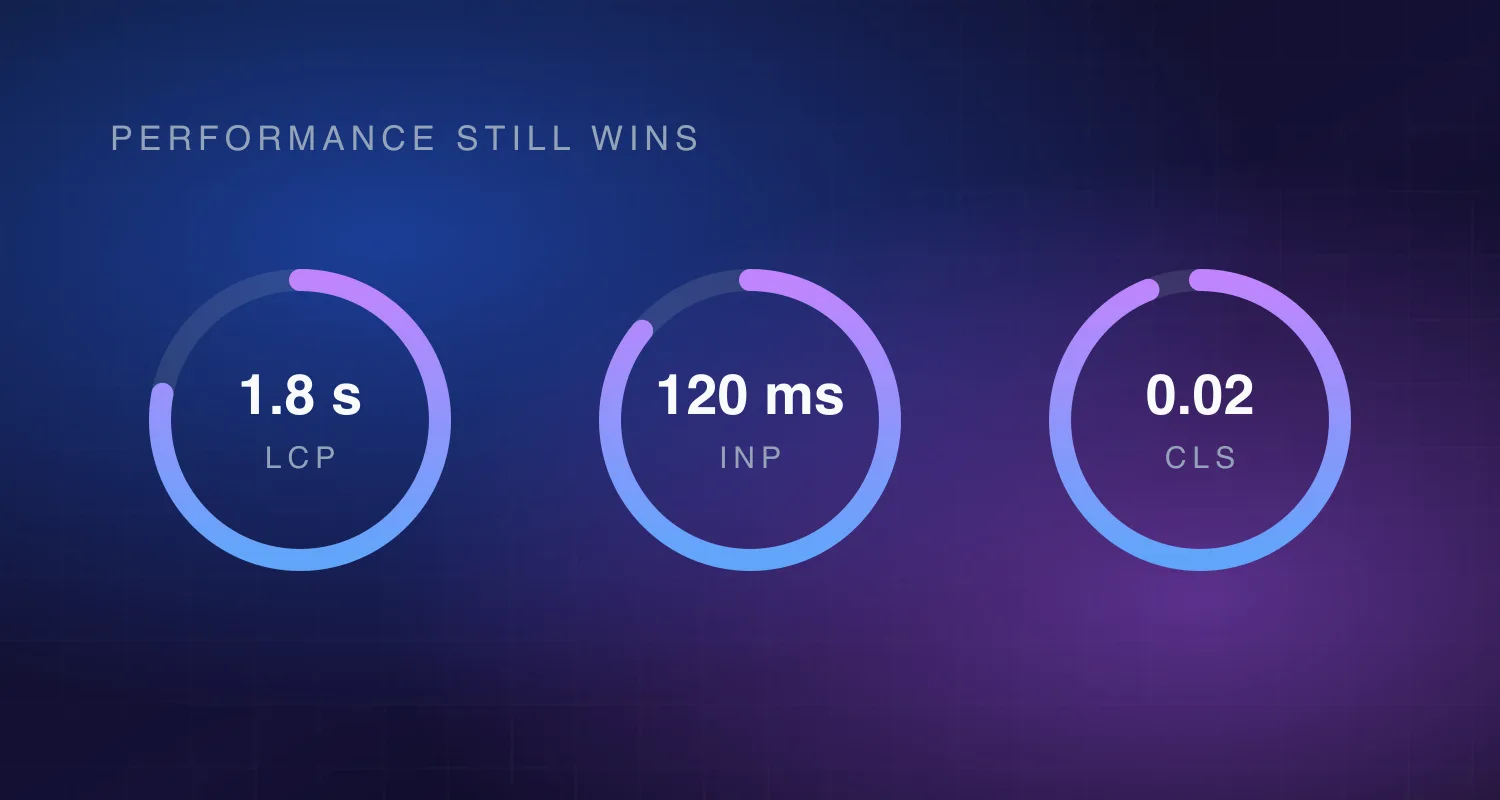
- Ship less JavaScript: render on the server and hydrate only what is interactive.
- Serve modern image formats at the size they are displayed.
- Self-host fonts and preload only the ones above the fold.
- Measure on a mid-range phone on 4G, not on your laptop.
4. Content teams want WordPress comfort without WordPress weight
Clients still love the WordPress editing experience: blocks, a media library, roles, revisions. What they no longer want is the plugin sprawl and the maintenance that comes with it. A focused headless or full-stack setup, with the block editor where writing happens and a page builder where layout happens, gives them the comfort without the weight.
The best CMS is the one your client can use on day one and you can maintain in year three.
Notes from a client workshop
5. Security is part of the definition of done
Faster delivery means more code reaches production, so the basics matter more: least-privilege roles, two-step sign-in for every admin, rate-limited forms, a strict Content Security Policy and dependencies that are pinned and audited. None of it is glamorous, and all of it is cheaper than an incident.
AI and web development: what I tell clients in 2026
- Expect faster first drafts and spend the saved time on research, review and testing.
- Keep a human accountable for every decision the site makes on your behalf.
- Treat performance and accessibility as requirements, not polish.
- Choose tools your team can actually maintain.
AI has made the web faster to build. Building it well is still a craft. If you are planning a site this year and want a second opinion on the stack, get in touch.